A 10-step framework for winning in the market
From Insights to Impact.
One of the most effective ways to operationalize product strategy is through strategy mapping. Not as a static artifact, but as a living model of how the business works.
The red thread
Connect where the business is going, how it creates value, and what each team must do.
A strong strategy map connects those three layers and creates a clear thread across the organization.
Product decisions tie back to customer outcomes. Engineering priorities connect to product strategy. Commercial teams reinforce the same value narrative in the market.
Without this, organizations drift. Teams optimize locally, priorities compete, and execution fragments. With it, decisions become coherent.
The real impact shows up in how quickly teams can move without losing alignment and deliver products that have an impact.
Insights to Impact
Ten decisions that build one aligned market strategy.
Use the visual for the complete flow, then explore the questions and output behind each step.
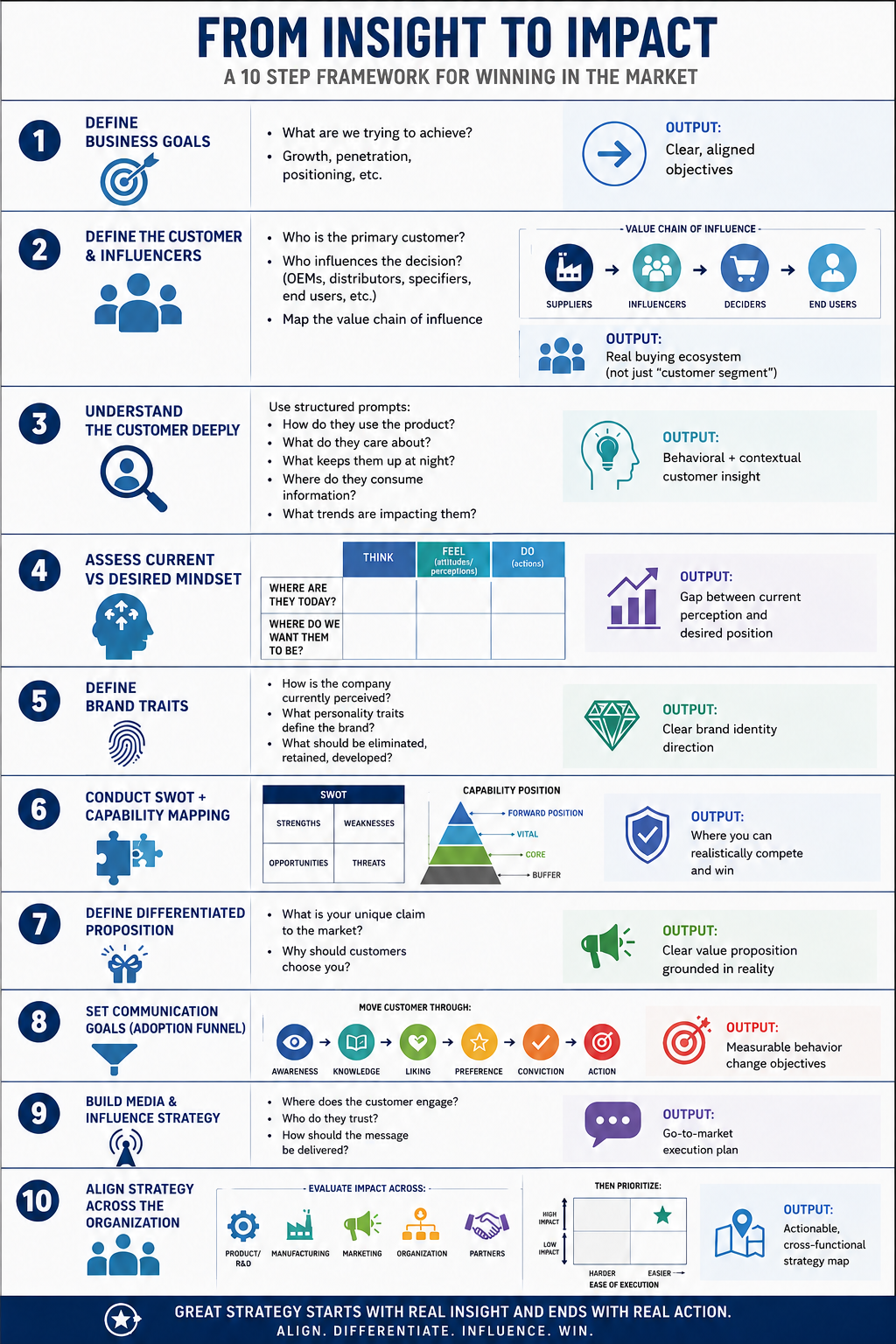
- 01
Define business goals
- What are we trying to achieve?
- Growth, penetration, positioning, or another priority?
OutputClear, aligned objectives
- 02
Define the customer and influencers
- Who is the primary customer?
- Who else uses the product or affects the decision?
- What is the value chain of influence?
OutputA clear view of the buying ecosystem, not just a customer segment
- 03
Understand the customer deeply
- How do they use the product and what do they care about?
- What keeps them up at night?
- Where do they consume information and what trends affect them?
OutputBehavioral and contextual customer insight
- 04
Assess current vs. desired mindset
- What do they think, feel, and do today?
- What do we want them to think, feel, and do?
OutputThe gap between current perception and desired position
- 05
Define brand traits
- How is the company currently perceived?
- Which traits should be eliminated, retained, or developed?
OutputClear brand identity direction
- 06
Conduct SWOT and capability mapping
- What are the strengths and opportunities?
- Which capabilities are core, vital, buffer, or forward position?
OutputWhere the organization can realistically compete and win
- 07
Define the differentiated proposition
- What is the unique claim to the market?
- Why should customers choose you?
OutputA clear value proposition grounded in reality
- 08
Set communication goals
- How will the customer move from awareness to knowledge, liking, preference, conviction, and action?
- What behavior change can be measured?
OutputMeasurable behavior-change objectives
- 09
Build media and influence strategy
- Where does the customer engage?
- Who do they trust?
- How should the message be delivered?
OutputA go-to-market execution plan
- 10
Align strategy across the organization
- What changes across product, R&D, manufacturing, marketing, the organization, and partners?
- What is highest impact and easiest to execute?
OutputAn actionable, cross-functional strategy map
The outcome